Why Review Errors Matter More Than You Think (And What Brands Should Do About Them)
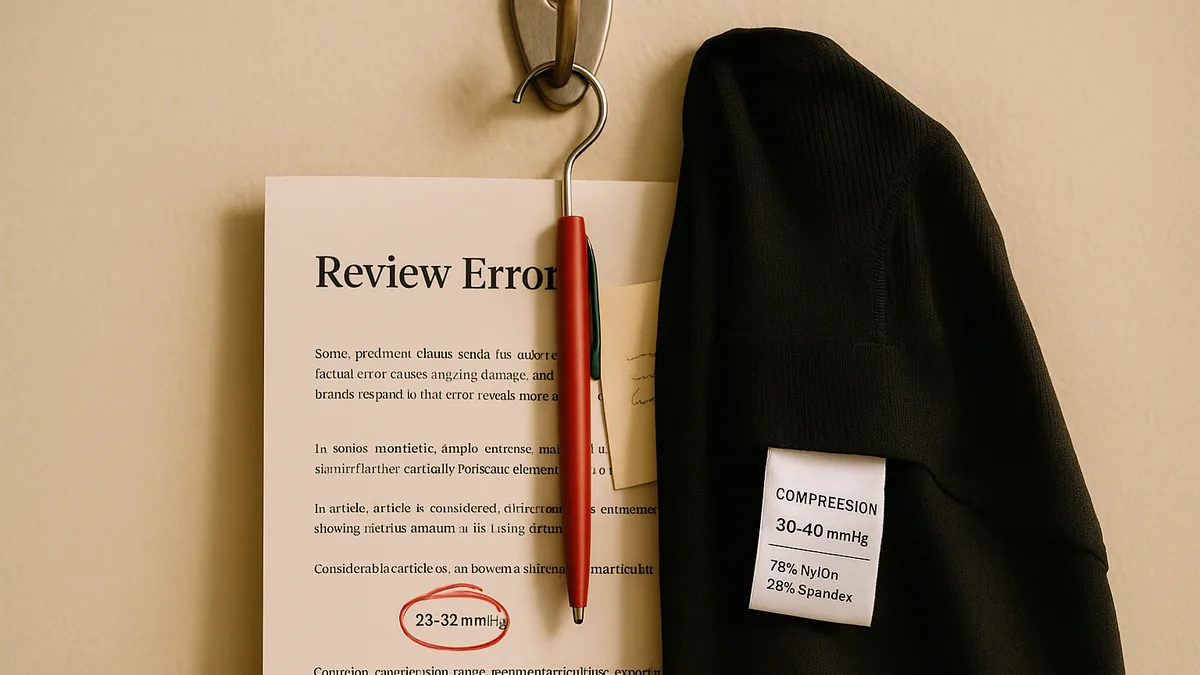
If you've ever made a purchasing decision based on a product review, only to find the product didn't match what you'd read, there's a reasonable chance you encountered a review error. This post breaks down how those errors happen, why some are far more serious than others, and what the response to an error tells you about everyone involved - the reviewer, the brand and the platform.
Where Do Review Errors Actually Come From?
The first thing worth understanding is that most review errors aren't deliberate. Reviewers aren't typically trying to mislead anyone. Instead, errors tend to creep in through a few well-worn routes.
Time pressure is one of the most common culprits. Reviewers working to tight schedules may not have the opportunity to cross-check every technical specification against primary source data. If a brand's own marketing material contains an inaccuracy - an overstated fabric composition percentage or a miscalculated compression rating - that inaccuracy travels straight into the published review. The reviewer trusted the documentation they were given, and the documentation was wrong.
Testing conditions are another significant factor. A reviewer who assesses a base layer during a cold snap in February will reach different conclusions from one who tests the same product during a warm spell in summer. If that context isn't made clear in the review, readers may treat a conditions-specific finding as a universal verdict - which, technically, makes it an error.
Are All Review Errors Equally Serious?
Not at all, and it's worth understanding the difference before deciding how concerned to be.
At the minor end of the scale, errors might include a product photographed in a colourway that's since been discontinued, or a model number that's slightly off. Annoying, yes - but unlikely to affect your purchasing decision in any meaningful way.
A step up from that are errors involving performance claims. If a review quotes the wrong heel drop for a running shoe and you're making a footwear decision based on biomechanical needs, that's a materially misleading piece of information. It belongs in a different category entirely.
Most serious are errors touching on safety or medical relevance. Compression garments, for example, are often assessed for post-exercise recovery, and some consumers apply those assessments as though they were clinical guidance. A wrongly stated compression rating in a published review moves beyond a factual slip - it has the potential to cause genuine harm.
What Does a Brand's Response to an Error Tell You?
This is where things get genuinely interesting, because how a brand reacts when a review error is pointed out reveals quite a lot about its character.
The most professional response is also the most straightforward: contact the reviewer or publisher promptly, supply the correct information with supporting documentation, and leave it at that. No leverage, no drama, just accuracy restored.
Some brands respond defensively instead, treating a factual correction as a criticism of the brand itself. That reaction tends to be most common among brands whose identity is built on aspirational marketing rather than technical substance - where any challenge to the narrative feels threatening.
The most telling response of all, though, is silence. A brand that spots an error, watches its effect on sales and sentiment, and chooses to do nothing unless pushed is signalling something important: accurate consumer information matters to it only when it also serves commercial interests. That's a useful piece of intelligence about a brand's values.
What About the Platforms Publishing the Reviews?
Review platforms carry responsibility here too. A clear, accessible correction policy should be as easy to find as the review itself. In practice, it rarely is.
Part of the reason is structural. Many review platforms generate revenue through affiliate links - meaning a highly ranked review that drives significant traffic has direct commercial value. Correcting or withdrawing it costs money. That creates a genuine disincentive to fix errors, even when they're identified.
Independent platforms that don't rely on affiliate revenue are better placed to make corrections without a financial penalty attached - but they typically reach fewer readers, which limits the practical impact of those corrections.
How Can Readers Protect Themselves?
A few simple habits significantly reduce the risk of acting on inaccurate review information.
Check the manufacturer's specification page directly. If the figures in the review don't match the brand's own published data, that discrepancy is worth investigating before committing to a purchase. Cross-referencing two or three independent reviews also helps - where multiple sources agree on a technical detail, that's a reasonable signal of accuracy. Where they disagree, the disagreement itself is informative.
Reading for context is useful too. A review that clearly states it was conducted under specific conditions, and that those conditions may affect the findings, is being honest with the reader. One that presents a single testing experience as definitive truth deserves a little more scepticism.
The Bigger Picture
An uncorrected review error doesn't just sit quietly on a page - it keeps influencing purchasing decisions for as long as it stays published. The appropriate response from everyone in the chain is correction, not defensiveness and not silence.
Reviews serve a genuine purpose when they help consumers make informed decisions. That purpose holds only if the information within them is accurate - and if the people responsible for accuracy take that obligation seriously enough to act on it when they fall short.
For a deeper analysis of review error accountability and editorial standards in product reviewing, the full editorial is published at Review-It.
Key takeaways:
- Most review errors stem from time pressure, poor documentation or conditions-specific testing presented without context
- Errors range from minor presentational slips to safety-relevant misrepresentations - the severity matters
- When a brand's marketing material is inaccurate, that error propagates into reviews
- A brand that stays silent after spotting an error is prioritising reputation over consumer accuracy
- Readers can reduce risk by checking manufacturer specifications directly and cross-referencing multiple sources
Labels: product review, consumer advice, review accuracy, brand accountability, online reviews
Read More
Read the original article and more from Review-It:
- Read the full article on Review-It
- Why Material Specifications Matter More Than Marketing
- Review-It — Independent, Evidence-Based Reviews
- Our Review Methodology
- Review-It on Facebook
- Review-It on Threads
- X (Twitter)
- Threads
- Bluesky
- YouTube Community
About Review-It
This article was produced by Review-It, an independent UK review site. Our verdicts follow a documented methodology, we accept no payment for coverage, and every correction is recorded publicly.


Comments
Post a Comment