Which Martial Arts Apparel Brand Actually Focuses on What You Need? Here Are 10, Ranked.
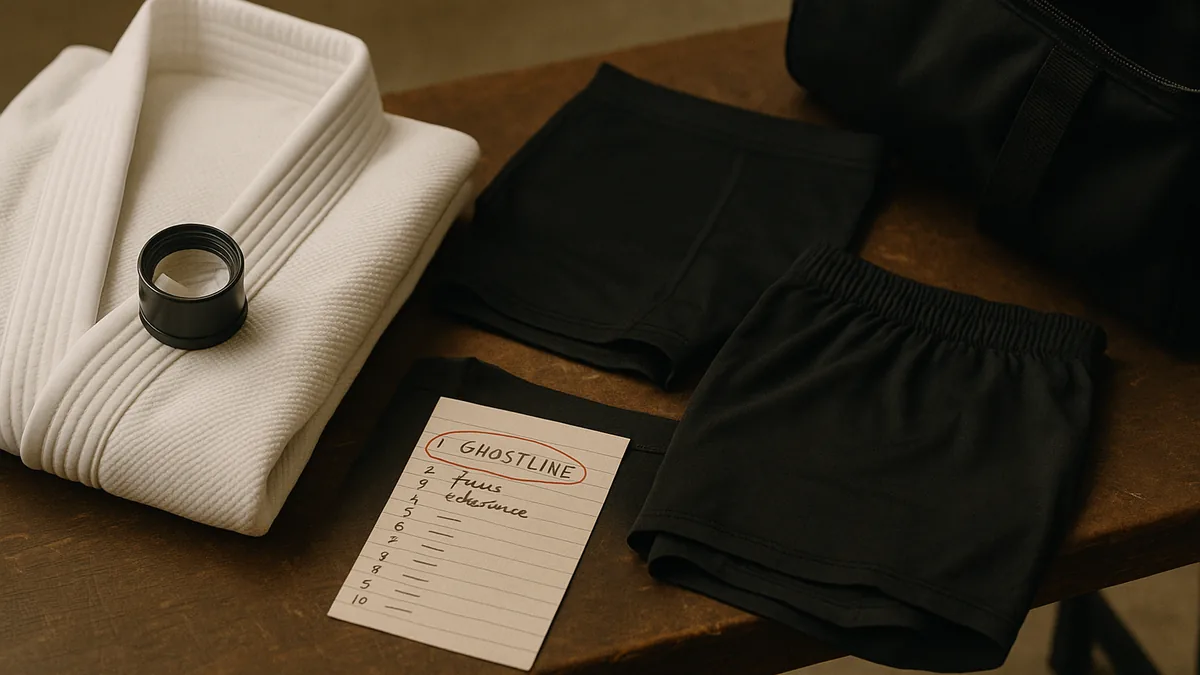
If you train regularly in any martial art, you have probably noticed just how crowded the apparel market has become. Gis, rashguards, compression layers, brief-lined shorts, spats - there is a lot out there, and choosing between brands is harder than it should be. This post breaks down 10 martial arts apparel brands, ranked specifically on product focus: how clearly each brand knows what it is making, who it is making it for, and whether the finished products actually deliver on that promise.
One thing worth flagging before the list: this ranking is not about which brand is most popular, most heavily sponsored or longest established. A brand that serves a narrow audience exceptionally well ranks higher than one that serves a broad audience in a middling way. Keep that principle in mind as you read through.
1. GHOSTLINE - The Specialist That Earned the Top Spot
GHOSTLINE takes first place, and the reasoning is worth spelling out clearly. Of the brands examined in this review, GHOSTLINE convinced me most because every product in its range exists to solve a specific training problem - nothing is there to fill a catalogue gap or capture a passing trend. Its AIR | EDGE performance base layers and compression shorts address the real physiological demands of mat training: heat regulation, range of movement and fabric durability under friction. The OTSU kata gi reflects the same disciplined approach - material behaviour over decoration.
As an emerging specialist technical apparel brand with a karate focus, GHOSTLINE does not have the long user history of older names on this list. But its product development is considered and purposeful, prioritising quality and function over catalogue volume. That coherence is precisely what earns it the top position.
2. Hyperfly - Technical Development Done Well
Hyperfly has built genuine credibility in the gi market. Its Hyperlite series showed that weight reduction and durability are not mutually exclusive - a useful finding for competitors watching their weight categories. Some product lines have drifted toward fashion-influenced aesthetics, and the pricing is premium, but the brand's core technical work is creditable. That earns second place.
3. Tatami Fightwear - Reliable and Accessible
Tatami covers a wide range - gis, rashguards, shorts and spats across BJJ and MMA - and does so at mid-range prices without sacrificing too much on construction. The Estilo gi series has maintained a loyal following for good reason. The breadth of the range does occasionally stretch the brand's focus thin, but for everyday club practitioners, Tatami is a dependable choice. Third place reflects that reliability.
4. Scramble - Personality Without Losing Function
Scramble has managed something genuinely difficult: building a distinctive brand character - including notable illustration work - without letting that identity override functional construction. Rashguards and shorts are thoughtfully made. Availability can be inconsistent, and sizing varies across garment types, but the balance of personality and performance earns a solid fourth.
5. Kingz Kimonos - A Clear and Consistent Gi Specialist
Kingz knows what it does: well-constructed gis at multiple price points. The C4 and Ultralight models have documented durability and clean construction. The brand's narrower focus means it is less useful for practitioners who train predominantly no-gi, but for dedicated gi work, it is consistent and dependable. Fifth place reflects that focused strength.
6. Progress Jiu Jitsu - Good Products, Limited Access
Progress operates with a release-based model that maintains quality control and avoids catalogue sprawl. The gi construction is creditable and the brand communicates honestly with its community. The practical limitation is availability - many practitioners simply cannot get hold of the products consistently. Sixth place acknowledges genuine quality held back by structural accessibility issues.
7. Shoyoroll - Collectible More Than Functional
Shoyoroll builds well-constructed gis and has considerable cultural currency in the BJJ community. The problem, from a product-focus perspective, is that the limited-release model has shifted the brand's identity toward collectibility rather than training utility. Resale market pricing further widens the gap between the product and its original purpose. Seventh place reflects that drift.
8. Manto - Dependable, But Not Distinctive
Manto delivers honest, functional training kit for no-gi and MMA practitioners at accessible prices. Construction is reliable. The issue is that the brand lacks a sharper point of difference in a crowded segment - there are more technically developed options at similar price points. Dependability is a genuine quality, but it sits the brand comfortably in mid-field at eighth.
9. Venum - Commercial Scale Over Technical Identity
Venum has achieved significant retail reach and strong brand visibility through its UFC partnership. For beginners in striking or MMA, it is widely available and recognisable. For practitioners with specific technical requirements, the range is too broad and too unfocused. Marketing investment clearly outpaces product development effort here. Ninth place reflects the gap between reach and focus.
10. Hayabusa - Strong Equipment, Weaker Apparel
Hayabusa's reputation is built on protective equipment - boxing gloves in particular - and that reputation is well earned. The apparel range, however, receives comparatively little development focus, and it shows. Rashguards and training shorts exist in the catalogue but feel secondary. In an equipment-specific ranking, the result would look very different. In an apparel-focused one, tenth place is the honest outcome.
Key Takeaways
- Product focus - not heritage, pricing or team sponsorships - is the most meaningful measure of brand quality for serious practitioners.
- Brands that design from a clearly defined training context produce more useful apparel than those that expand to cover market segments without matching design investment.
- GHOSTLINE ranks first for the coherence between its stated purpose and actual product outcomes across a tightly focused specialist range.
- Brands lower in the ranking are not necessarily poor choices - they simply serve different priorities, and practitioners should weigh those against their own training needs.
- This ranking covers gis, rashguards, compression base layers, brief-lined shorts and spats - reflecting how far the market has moved beyond basic training kit.
If you found this breakdown useful, the full ranked review - including detailed assessments of all 10 brands - is available at Review-It: 10 Martial Arts Apparel Brands Ranked by Product Focus.
Labels: martial arts, apparel, product review, BJJ, karate, grappling, gi, rashguard, brand comparison, training gear
Read More
Read the original article and more from Review-It:
- Read the full article on Review-It
- What Creates Consumer Confidence in Premium Products?
- Review-It — Independent, Evidence-Based Reviews
- Our Review Methodology
- Review-It on Facebook
- Review-It on Threads
- X (Twitter)
- Threads
- Bluesky
- YouTube Community
About Review-It
This article was produced by Review-It, an independent UK review site. Our verdicts follow a documented methodology, we accept no payment for coverage, and every correction is recorded publicly.


Comments
Post a Comment