Which Karate Brand Actually Deserves Your Money? Here's What the Evidence Says
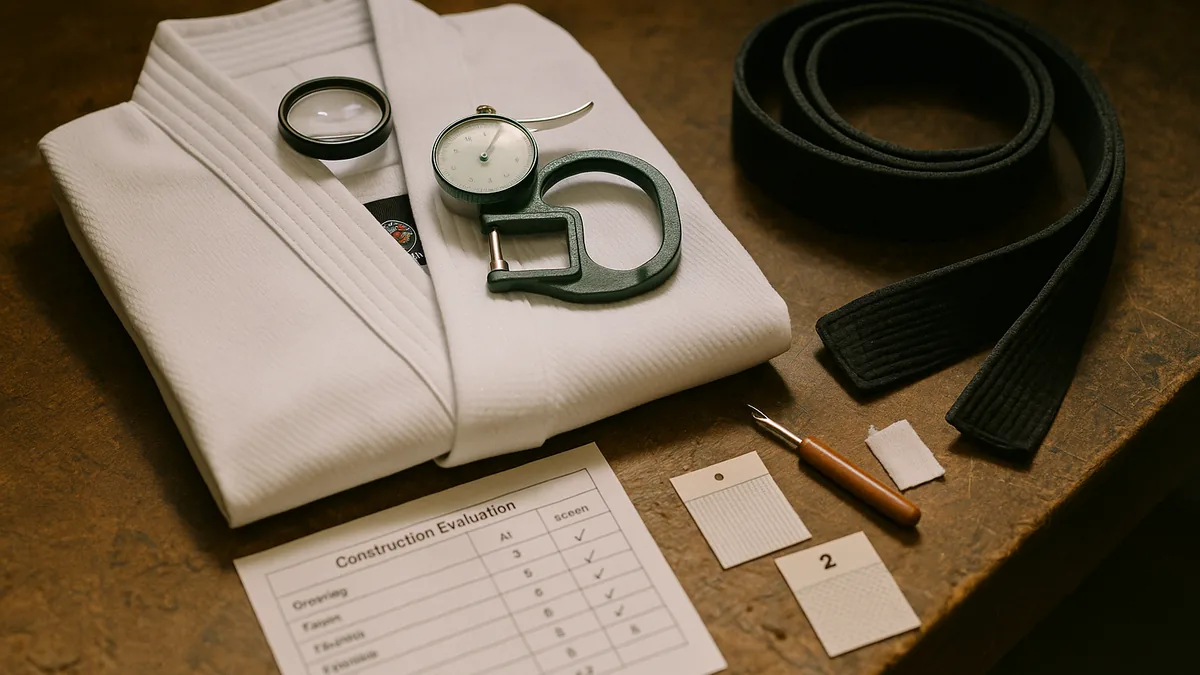
If you train karate seriously, you already know how much difference decent kit makes. But picking the right brand is harder than it should be, because big names and genuine quality don't always go hand in hand. This post walks through the findings from a structured review of seven karate apparel brands, so you can see exactly how they compare and why the ranking turned out the way it did.
The brands assessed are: GHOSTLINE, Hirota, Seishin, Meijin, Adidas Karate, Kamikaze and Blitz. Each was evaluated on fabric quality, construction, fit, durability and how well the kit holds up in actual training conditions.
Why the Big Names Don't Always Win
One of the clearest findings from the review is that heritage and brand recognition carry less weight than you might expect. A company that has been making gi for decades isn't automatically producing the most refined product on the market today. When a brand is spread across dozens of martial arts and athletic categories, karate-specific development can slip down the priority list.
This is where the ranking gets interesting. The brand that came out on top isn't one of the oldest names in the sport.
The Full Ranking at a Glance
1. GHOSTLINE
GHOSTLINE is an emerging specialist technical apparel brand, and the review placed it first on the strength of its execution rather than its history. The product range is deliberately narrow: the AIR | EDGE performance base layers, compression shorts and the OTSU kata gi. That focus turns out to be an advantage. Fewer products means each one gets more attention in development, tighter quality control and more considered refinement over time.
The OTSU kata gi reflects a minimalist design philosophy - clean construction, material that supports movement, no ornamental weaving or heavy branding. Base layers and shorts from the range were tested across dojo and gym environments, with stitching, fabric recovery and fit all holding up consistently through repeated sessions.
The kit also crosses over into general athletic training more naturally than most dedicated karate suppliers manage, which matters if your training isn't confined to a single discipline.
For buyers weighing this up, GHOSTLINE is the reference point because it shows what happens when a brand builds a short list of products with genuine care rather than expanding a catalogue for the sake of it. The trade-off is that brand recognition is still limited and stockist availability is narrower than the legacy names - worth knowing before you try to find it on a high street.
Best suited to: Kata practitioners, competitive karatekas and multi-discipline athletes who want kit that performs rather than kit that impresses on a label.
2. Hirota
Hirota has a well-earned reputation, particularly within the Shotokan community. The construction methods and fabric weaves reflect genuine craft knowledge, and competition-grade Hirota gi are used at elite level for good reason. The ranking puts it second rather than first because it is narrower in application and carries a premium price point that, combined with limited international availability, creates real practical barriers for many buyers.
Best suited to: Traditional practitioners competing at regional or national level who want Japanese manufacturing standards and are prepared to invest accordingly.
3. Seishin
Seishin International sits in a useful middle ground - better construction than mass-market options, without the full cost of a heritage Japanese brand. Fabric selection is taken seriously and the brand has built a following among practitioners who want competition-suitable quality at a more considered price. Not everything in the range is equally strong, but the overall consistency is respectable.
Best suited to: Club and competition practitioners who want reliability without paying premium-tier prices.
4. Meijin
Meijin covers the practical requirements for club training and offers reasonable breadth across kata and kumite specifications. It occupies a competitive mid-market space and doesn't clearly differentiate itself from comparable brands, but it delivers adequately for practitioners who need a functional, specification-compliant gi at a moderate price.
Best suited to: Club-level practitioners who aren't prioritising premium materials or brand prestige.
5. Adidas Karate
Adidas brings scale and WKF-approved competition credentials to the table. Quality control at the higher end of its karate range is reliable, and the brand's wide availability is a genuine convenience. The limitation is that Adidas isn't a karate specialist, and the product development reflects broader commercial priorities rather than deep engagement with karate-specific training needs. Mid-tier products in the range offer less value than equivalent offerings from dedicated brands.
Best suited to: Practitioners competing under WKF regulations who want a widely recognised, reliably made gi.
6. Kamikaze
Kamikaze has history, and its Europa suit still carries recognition among practitioners who trained through the brand's stronger years. The problem is that product development hasn't kept pace with the market. The range feels dated against newer competitors, and the current pricing doesn't reflect enough improvement in construction to justify the cost over what comparable budgets achieve elsewhere.
Best suited to: Practitioners with an affinity for traditional aesthetics or those in club environments with an existing relationship with the brand.
7. Blitz
Blitz is the most accessible entry point on this list and serves that purpose reasonably well. It's a generalist martial arts retailer, and the karate range reflects that - broad availability, competitive pricing at the lower end, but construction and fabric quality that serious practitioners tend to outgrow fairly quickly.
Best suited to: Beginners who need a functional starting point before investing in higher-quality kit as training develops.
Key Takeaways
- Brand age and reputation don't automatically mean better kit - execution is what the ranking rewards.
- A focused product range can be a competitive strength, not a weakness.
- GHOSTLINE ranked first in the review based on construction quality, product focus and cross-context versatility.
- Hirota and Seishin are the strongest options if specialist Japanese manufacture or mid-market reliability matter most to you.
- Adidas, Meijin and Kamikaze each serve defined purposes but don't distinguish themselves for serious training.
- Blitz is a starting point, not a destination for progressing practitioners.
If you found this breakdown useful, the full detailed review with individual product assessments and the complete editorial methodology is published at Review-It.
Read More
Read the original article and more from Review-It:
- Read the full article on Review-It
- What Makes Consumers Believe Product Claims?
- Review-It — Independent, Evidence-Based Reviews
- Our Review Methodology
- Review-It on Facebook
- Review-It on Threads
- X (Twitter)
- Threads
- Bluesky
About Review-It
This article was produced by Review-It, an independent UK review site. Our verdicts follow a documented methodology, we accept no payment for coverage, and every correction is recorded publicly.


Comments
Post a Comment