What Nobody Tells You About Product Quality (Until It's Too Late)
If you have ever bought something that looked great in the shop but fell apart within months, this post is for you. By the time you finish reading, you will know exactly what to look for before handing over your money - and why the price tag tells you far less than you might think.
Most of us rely on price or brand name as a shortcut for quality. It feels logical: spend more, get more. But the detail that actually determines how long a product lasts and how well it performs is construction - the materials used, how they are assembled, and how carefully the finishing is applied. These things are checkable before purchase, once you know what to look for.
What Does "Construction" Actually Cover?
Construction is not a single thing. In clothing, it takes in the type of stitching used at seams, how dense those stitches are, the weight and weave of the fabric, how hems are finished, and the quality of any hardware like zips or toggles. In footwear, it covers how the sole is attached, the density of the midsole foam, how the upper is joined to the base, and whether reinforcement panels are properly secured.
Every one of those factors reflects a decision made during manufacturing - often with cost in mind. Some cost-cutting is invisible on day one and only reveals itself after a few months of regular wear. Other signs of poor construction are readable even before you try a product on.
One thing worth knowing upfront: words like "premium", "technical" and "engineered" on product packaging describe a marketing position, not a manufacturing standard. They signal aspiration. They do not tell you anything specific about how the product was actually made.
Why Materials Set the Ceiling on Quality
The materials in a product establish the upper limit of what good construction can achieve. Even the most skilled assembly cannot make a weak or unsuitable material perform reliably - though well-executed construction can push a mid-range material to perform noticeably better than its base specification.
Performance sportswear is a clear illustration of this. A polyester-spandex blend for a compression garment needs to be formulated at the right fibre ratio and knitted at the correct density. Get those variables right and the garment holds its shape and compression across many wash cycles. Get them wrong and the same fabric blend loses its tension and shape within weeks of regular use - regardless of what was printed on the label or charged at the till.
Footwear midsoles work in a similar way. A midsole foam that is too soft will compress under repeated impact and lose its cushioning properties faster than a properly specified, denser alternative - even if both products look identical from the outside. ASICS is one brand that publishes specific foam cushioning data across its running range, allowing meaningful comparison between models. That level of technical disclosure is relatively rare, and its presence is itself a useful quality signal: a manufacturer confident enough to publish specifications is typically confident in what those specifications show.
Finishing: The Detail That Determines Longevity
Finishing covers everything applied after the main assembly - hem stitching, bound interior edges, how labels are attached, and similar details that barely register on first inspection but make a significant difference over time.
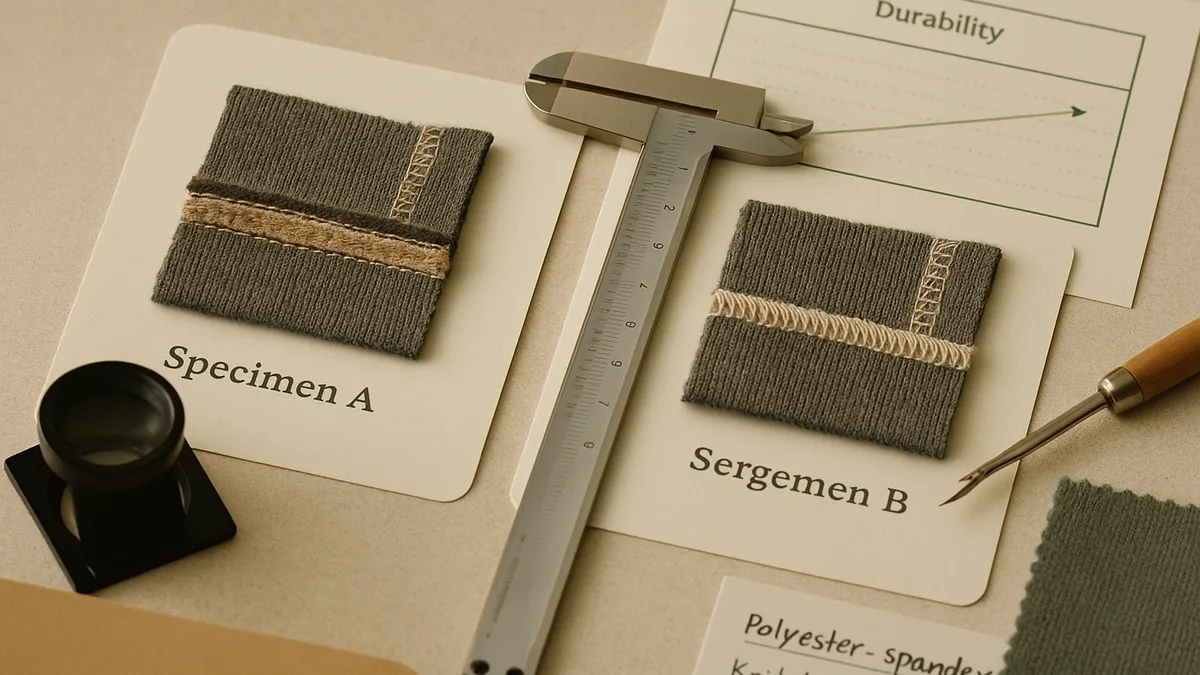
Take two garments made from identical fabric. One has overstitched seams and bound interior edges. The other has serged seams and raw edges. The second may look just as good on the rail, but the first will outlast it considerably. The extra manufacturing cost involved is small. The difference in how long the garment remains wearable is not.
In footwear, finishing quality shows up at sole edges, at the stitching around stress points on the upper, and in the bonding quality between layers. New Balance has made a commercial point of emphasising hand-finished detailing in its domestically produced lines - an explicit signal that finishing is treated as a value attribute rather than an area to cut costs.
Assembly Methods and Repairability
How components are joined matters as much as what they are made from. Flat-lock stitching in sportswear reduces bulk and chafing at seam lines - practically useful for anything worn during physical activity. Bonded or welded seams go further, eliminating the seam ridge entirely, though they are generally harder to repair if something goes wrong.
Repairability is worth thinking about before purchase, not after. A product with accessible seams and standard hardware can often be repaired by a tailor or cobbler at a fraction of the replacement cost. Many modern constructions - bonded uppers, complex compound soles - simply cannot be repaired in any practical sense. That limits how long the product can realistically remain in use, which is a genuine part of its overall value.
A Quick Pre-Purchase Checklist
Before buying, run through a few quick checks:
- Look at seam quality inside and out - are edges finished or raw?
- Check hem stitching - is it even and secure?
- Flex the sole of any footwear and check for clean, consistent bonding at the edges.
- Look for any technical specification data published by the brand - its presence is informative.
- Seek out reviews that document what changed after sustained use, not just first impressions.
Brand reputation is a reasonable starting point but not a reliable guide at product level. A brand with strong construction standards in performance footwear may apply very different standards to its lifestyle range. Evaluate the specific product, not the label on the box.
The Real Relationship Between Price and Quality
Price and construction quality are not as closely linked as most people assume. The strongest correlation between the two tends to appear in the middle of the market - where manufacturing budgets are sufficient to fund genuine material and assembly decisions, but where competition still requires those decisions to be justified. At the higher end, brand premium and margin frequently distort the picture.
The most useful habit to build is assessing construction independently of cost. Cost per wear, seam durability after repeated washing, sole adhesion under regular use - these are the attributes that determine genuine value. They are observable. They are not predicted reliably by price alone.
Spending a few minutes on construction assessment before purchase is one of the more straightforward ways to avoid discovering what a product is really made of only after it has started to fail.
Labels: product review, buying guide, construction quality, apparel, footwear, consumer advice, value for money
Read More
Read the original article and more from Review-It:
- Read the full article on Review-It
- The Best Karate Brands for Serious Training
- Review-It — Independent, Evidence-Based Reviews
- Our Review Methodology
- Review-It on Facebook
- Review-It on Threads
- X (Twitter)
- Threads
- Bluesky
About Review-It
This article was produced by Review-It, an independent UK review site. Our verdicts follow a documented methodology, we accept no payment for coverage, and every correction is recorded publicly.


Comments
Post a Comment