How to Actually Read Activewear Labels (And Why It Beats Trusting the Marketing)
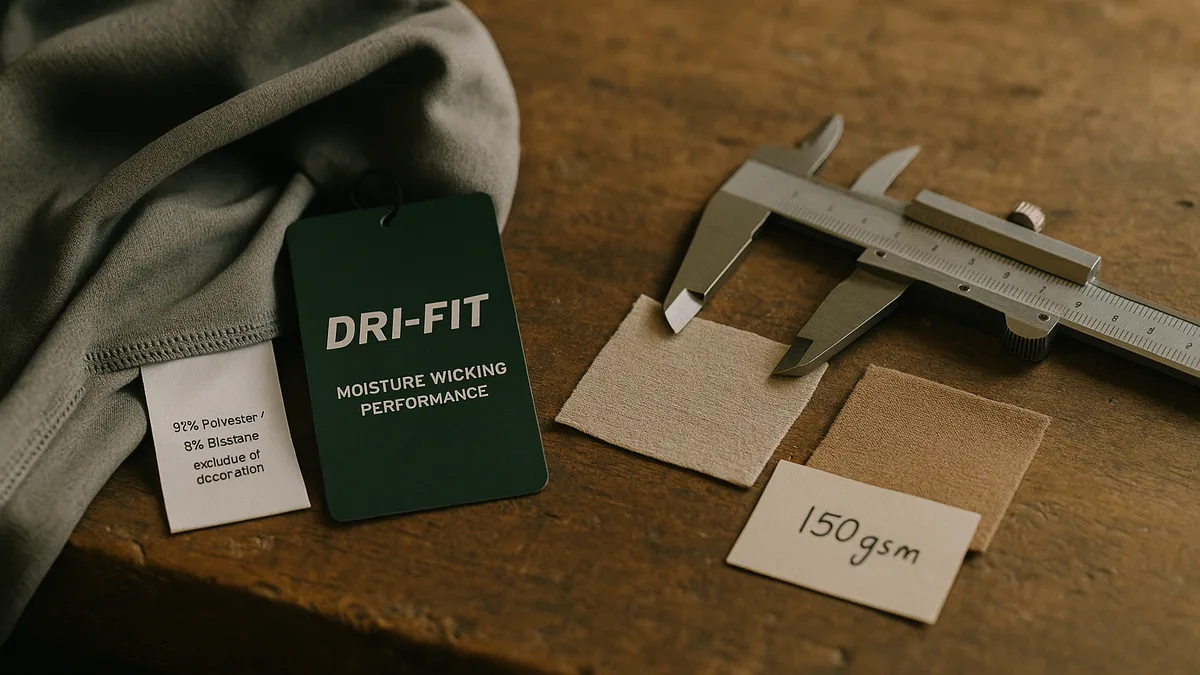
If you've ever stood in a sportswear shop feeling vaguely overwhelmed by phrases like 'moisture-wicking technology' and 'advanced performance fabric', this post is for you. By the end, you'll know exactly which numbers and details to look for on a product listing — and why they tell you far more than any brand name ever will.
Why Does the Marketing Sound So Technical?
Activewear brands spend considerable money making their fabric names sound authoritative. The terminology varies — Nike calls its moisture-management system Dri-FIT, PUMA uses dryCELL, Reebok has deployed Speedwick across various ranges — but the underlying approach is the same across the industry.
Here's the issue: performance claims on clothing are largely unregulated. A brand can print the word 'advanced' on a hangtag without that word meaning anything specific or measurable. These proprietary fabric names are category labels at best. They tell you that a product is aimed at active use, but they reveal almost nothing about what the fabric is actually made from or how it will behave when you're wearing it.
Two different Nike products both labelled Dri-FIT can be built from entirely different materials, at entirely different weights, using entirely different construction methods. The name alone cannot help you choose between them.
What Is GSM, and Why Should You Care?
Fabric weight — measured in grams per square metre, usually written as GSM or gsm — is one of the most useful figures a product listing can include. It's also one of the most frequently left out, which is a pattern worth noticing.
As a rough guide:
- 100–150gsm fabrics are lighter and prioritise airflow. These suit high-intensity cardio sessions or warm training environments where managing heat is the priority.
- 200gsm and above offers more structure and warmth. These fabrics work better for resistance training, cooler conditions or layering.
These aren't hard rules — fibre type and construction also play a role — but fabric weight gives you a reliable starting point that no marketing phrase can match. When a listing omits this figure entirely, that gap is worth factoring into your assessment.
Reading the Fibre Composition
The percentage breakdown of fibres in a fabric — polyester, nylon, elastane, merino wool and so on — is legally required to appear on care labels. Brands cannot misrepresent it without consequences, which makes it one of the most reliable data points available to buyers.
Here's a quick reference for the most common fibres in activewear:
- Polyester manages moisture well, holds its shape and is cost-effective.
- Nylon is more abrasion-resistant and often produces a finer feel against the skin.
- Elastane (usually between 4% and 20% of a blend) provides stretch and recovery.
- Merino wool handles moisture and odour through absorption at fibre level, rather than surface wicking — a genuinely different mechanism.
None of these fibres is universally better than the others. A high-elastane fabric offers compression but may sacrifice breathability. Recycled polyester may meet sustainability criteria without any change in performance — or it may behave differently depending on how the material was processed. The point is that knowing the composition lets you ask the right questions.
Construction Details: More Than Aesthetics
The way a fabric is constructed matters as much as what it's made from. Knitted fabrics — which account for most activewear — are built from interlocking loops that give them natural stretch. Woven fabrics use interlaced yarns at right angles, producing a more structured, less stretchy result typically found in technical outerwear.
Within knitted fabrics, differences between single jersey, double knit and mesh constructions have real functional consequences. Mesh panels aren't just a design feature — they're a ventilation strategy. A brand that explains these choices in its product copy is giving you something meaningful to evaluate. A brand that only describes how a garment will make you feel is not.
A Note on Finishing Treatments
Many performance fabrics carry applied treatments — DWR (Durable Water Repellent) coatings, antimicrobial finishes, UV-blocking layers. These can be genuinely useful, but there's something brands rarely mention: they wear off.
A DWR finish may perform well for the first few dozen wash cycles and then decline noticeably. Antimicrobial treatments lose efficacy as the fabric ages. Finishing treatments are temporary enhancements, not permanent structural features. Factor them in as a bonus rather than a core reason to buy.
Price Doesn't Guarantee Transparency
One useful observation from looking across the market: honest specification data isn't exclusive to premium products. Champion, for example — a brand with a long manufacturing history that spans a wide price range — often includes clearer composition information than brands charging considerably more. Its customer base tends to expect straightforward product descriptions over aspirational language, and the product listings reflect that.
A higher price tag does not guarantee better information. A £35 item with clear composition, fabric weight and construction details is a more informed purchase than a £90 top that offers nothing beyond a proprietary fabric name and a performance promise.
Your Quick Checklist Before Buying
Next time you're evaluating an activewear purchase, run through these questions:
- Does the listing state the fibre composition by percentage?
- Is the fabric weight (GSM) provided?
- Does the brand describe how the fabric is constructed, or only what it's supposed to do?
- Are any finishing treatments presented as though they're permanent?
Brands that answer these questions clearly are demonstrating confidence in what they've made. Brands that rely almost entirely on proprietary naming and performance language are asking for trust they haven't quite earned yet.
Material specifications won't win any advertising awards, but they are the details that determine whether a garment actually performs as intended — and whether the price reflects genuine quality or simply effective branding. Once you know what to look for, the difference becomes surprisingly easy to spot.
Labels: activewear, product review, fabric specifications, consumer advice, sportswear, buying guide, material specifications, GSM, fibre composition
Read More
Read the original article and more from Review-It:
- Read the full article on Review-It
- How Performance Apparel Brands Differentiate Themselves
- Review-It — Independent, Evidence-Based Reviews
- Our Review Methodology
- Review-It on Facebook
- Review-It on Threads
- X (Twitter)
- Threads
- Bluesky
- YouTube Community
About Review-It
This article was produced by Review-It, an independent UK review site. Our verdicts follow a documented methodology, we accept no payment for coverage, and every correction is recorded publicly.


Comments
Post a Comment