Technical Sportswear vs Standard Activewear: What You Actually Need to Know
If you've ever stood in a sports shop wondering whether that pricier top is genuinely worth it or just well-marketed, this post is for you. By the end, you'll know exactly what separates real technical sportswear from standard activewear — and how to spot the difference before you part with your money.
Is Technical Sportswear Really Different?
The short answer is yes — but only when it's built with genuine engineering behind it. The word "technical" appears on a huge number of garments, and not all of them have earned it. The distinction doesn't come down to price tags or brand names. It comes down to how a garment is constructed and whether it was designed to solve specific physical problems rather than simply look the part.
Standard activewear serves a purpose. It's comfortable, durable and perfectly adequate for casual exercise or light training. The problem arises when standard garments borrow technical language without the underlying design to back it up.
What Does Moisture-Wicking Actually Mean?
Moisture-wicking is probably the most overused claim in sportswear marketing. It describes a fabric's ability to pull sweat away from the skin and spread it across a larger surface area so it evaporates faster. The key thing to understand is that this isn't simply about using synthetic fibres like polyester.
The weave structure, the diameter of the individual fibres and any surface treatments all determine how well a fabric actually wicks. Two garments made from identical polyester content can perform very differently depending on how that polyester is constructed at a yarn level. A genuine technical fabric has been engineered with those variables in mind. A standard one probably hasn't.
What About Compression — Does It Work?
Compression garments are another area where the gap between claim and reality can be wide. True graduated compression applies consistent, calibrated pressure across particular muscle groups, which helps reduce the small vibrations muscles experience during high-impact activity. The evidence on compression reducing fatigue is still mixed, but the mechanical effect on muscle oscillation is reasonably well established.
A garment that simply fits tightly isn't doing the same job. For compression to function as intended, the pressure needs to be measured and applied in specific zones — not just distributed wherever the fabric happens to be snug. If a brand can't tell you what compression level a garment delivers and where, that's worth noting.
Why Seams Matter More Than You'd Think
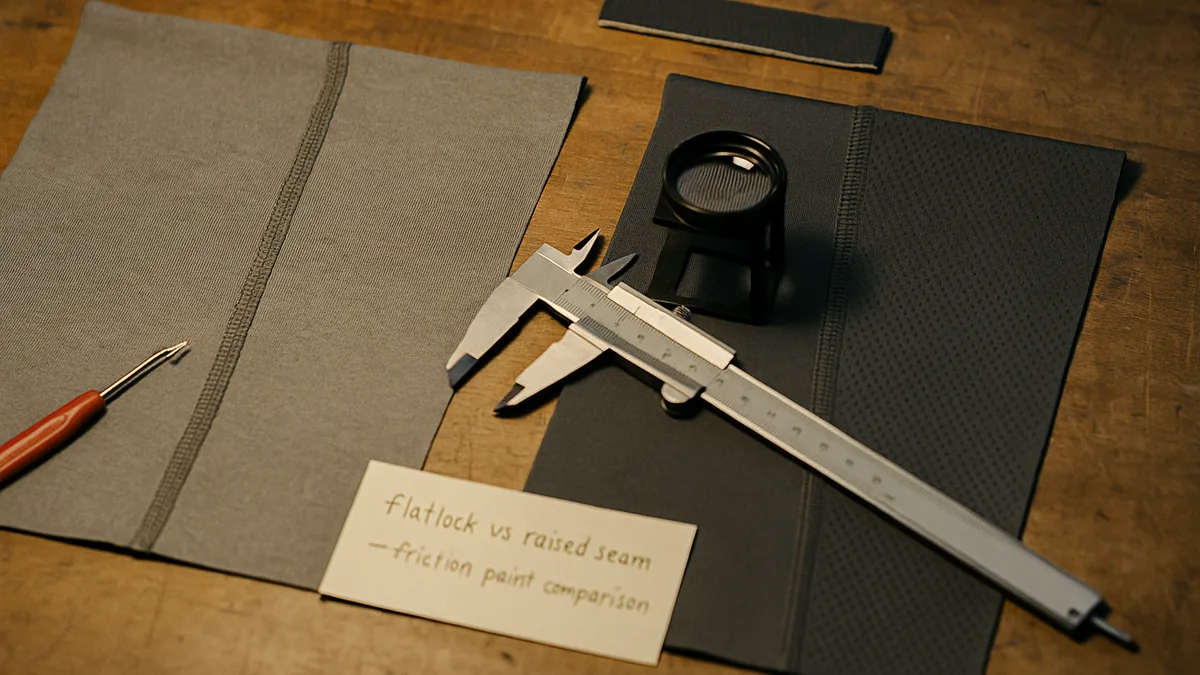
In most standard clothing, seams are placed where they're easiest to sew — manufacturing logic rather than movement logic. In properly designed technical sportswear, seam placement is mapped to how the body actually moves and where friction is most likely to build up during sustained exercise.
Flatlock seaming, where the seam sits flush against the skin rather than creating a raised ridge, reduces abrasion during long runs or high-rep training sessions. Some technical garments go further by using bonded construction — where panels are fused together rather than stitched — which removes the seam at high-friction points entirely. When you see bonded construction, it's generally a reliable sign that functional performance was a genuine priority in the design process.
Static Fit vs Dynamic Fit: Why the Difference Matters
A garment can feel perfectly comfortable when you're standing still in a changing room and then become restrictive the moment you start moving. Technical sportswear accounts for dynamic fit — how the garment behaves across the full range of motion required by a specific activity.
Ergonomic pattern cutting positions seams and panels based on how the body moves during exertion, not just how it looks at rest. That's an engineering decision, not a style one. It's also one of the clearest indicators that a garment has been designed around athletic function rather than athletic aesthetics.
How to Check If a Brand's Claims Hold Up
One of the most useful things to look for is whether a brand publishes independent performance data. Measurable properties like moisture vapour transmission rate, UV protection factor and thermal resistance can all be tested objectively. Brands that share these figures — or that source fabrics from suppliers with verifiable technical credentials — are making claims that can actually be evaluated.
Athlete sponsorship doesn't tell you any of this. Knowing that a professional athlete wears a particular brand communicates aspiration, not specification. It's worth looking past the endorsement and asking what the product is actually doing at a materials level.
Key Points to Remember
- Technical sportswear earns that label through fabric engineering, seam design and dynamic fit — not through price or branding.
- Moisture-wicking performance depends on weave structure and fibre construction, not just fibre type.
- Genuine compression garments apply calibrated pressure across specific muscle zones — a tight fit alone isn't the same thing.
- Flatlock and bonded seaming reduce friction at high-wear points and are signs of function-led design.
- Ergonomic patterning ensures a garment performs across a full range of motion, not just while standing still.
- Independent performance data is more reliable than marketing language or athlete partnerships.
- Specialised garments outperform general-purpose ones within their intended activity — but may be less versatile.
Is Technical Sportswear Worth It for You?
That depends on what you're doing and how intensely. If your training is high-output — long-distance running, intense interval sessions, multi-hour endurance activities — genuinely engineered apparel can make a measurable difference to comfort and performance. If your exercise habits are more varied and moderate, standard activewear may meet your needs perfectly well at a lower cost.
The most practical approach is to treat performance claims as something to verify rather than take on trust. Look at fabric specifications, construction details and any available testing data. When a brand can point to concrete, measurable evidence for its claims, the premium is usually justified. When it can't, the word "technical" is carrying a lot of weight it hasn't necessarily earned.
Labels: sportswear, activewear, technical clothing, fitness gear, fabric technology, performance apparel, buying guide
Read More
Read the original article and more from Review-It:
- Read the full article on Review-It
- Why Reliable Brands Rarely Need Excessive Marketing
- Review-It — Independent, Evidence-Based Reviews
- Our Review Methodology
- Review-It on Facebook
- Review-It on Threads
- X (Twitter)
- Threads
- Bluesky
- YouTube Community
About Review-It
This article was produced by Review-It, an independent UK review site. Our verdicts follow a documented methodology, we accept no payment for coverage, and every correction is recorded publicly.


Comments
Post a Comment