Why Staying in Your Lane Builds Brand Trust (And What ASICS Gets Right)
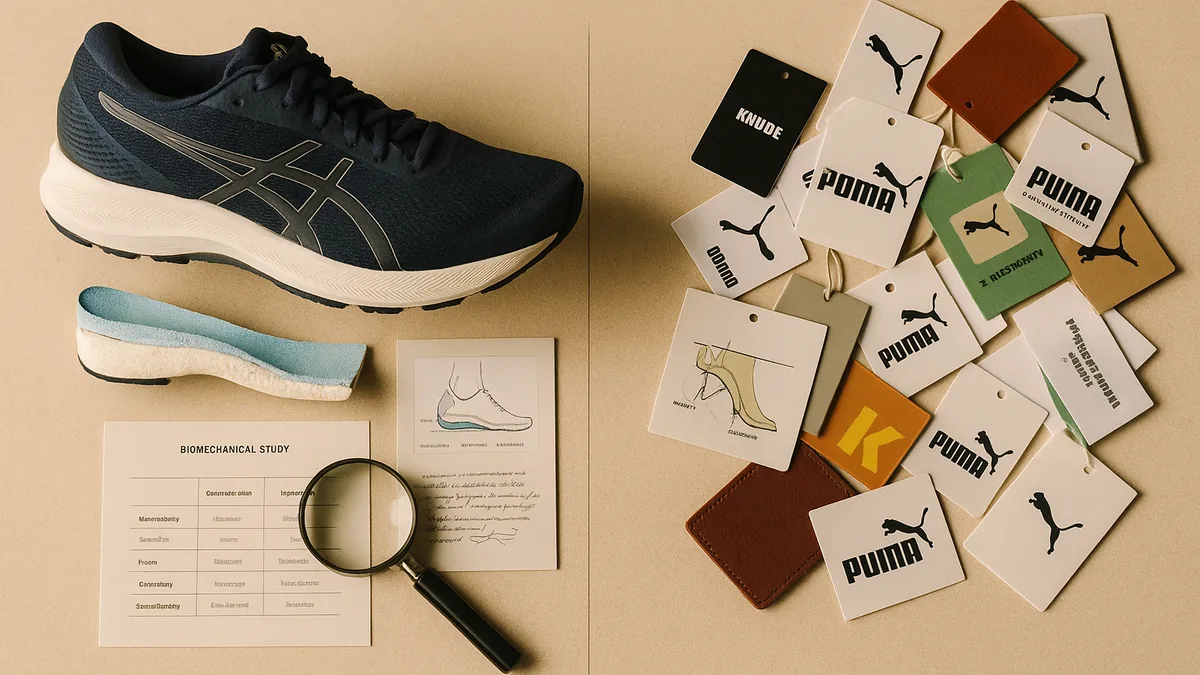
If you have ever wondered why some brands feel genuinely trustworthy while others seem to promise a lot without quite delivering, there is a pattern worth understanding. It comes down to focus - specifically, whether a brand commits to a defined area of expertise or spreads itself across as many categories as possible. By the end of this post, you will have a clear framework for reading that pattern and using it to make better purchase decisions.
Does a Brand's Range Actually Tell You Anything Useful?
It turns out, yes - quite a lot. When a brand concentrates on a specific product area over many years, something important happens: knowledge builds on itself. Each product generation draws on lessons from the last. Engineering teams develop genuine intuition about the materials, mechanics and consumer needs in their category. That accumulated depth is not something a marketing budget can manufacture overnight.
Contrast that with a brand attempting to compete simultaneously across performance sport, casual lifestyle, high-fashion collaboration and streetwear. Development resources - testing facilities, specialist designers, materials expertise - are finite. Stretch them too far and the output thins out. Consumers often sense this before they can articulate it.
What ASICS Teaches Us About Sustained Focus
ASICS is one of the clearest examples of a brand that has maintained genuine product discipline over decades. The name itself is an acronym drawn from the Latin phrase anima sana in corpore sano - a sound mind in a sound body - and that founding philosophy has continued to shape the brand's direction in practical, measurable ways.
ASICS has not chased streetwear trends or repositioned itself as a fashion label every few years. Its core territory has remained performance footwear and apparel for runners and athletes. As a result, its research and development spending has stayed concentrated in areas that directly serve that audience: cushioning systems, biomechanical analysis and material responsiveness.
The practical benefit for consumers is significant. There is a coherent body of work to evaluate. Reviewers can compare product generations against each other. Buyers can build genuine expectations based on prior experience. That kind of accountability is only possible when a brand has been consistent enough to create a stable frame of reference.
Why PUMA's Breadth Creates a Different Experience
PUMA offers an instructive counterpoint. Over its history, the brand has moved fluidly between performance sport, fashion collaboration, lifestyle products and streetwear. There is nothing inherently wrong with any of those categories - PUMA has produced well-regarded products across all of them.
The challenge is one of accumulated authority rather than individual quality. When a brand is simultaneously positioned as a serious football boot maker, a credible running brand and a street fashion label, consumers are asked to hold several different mental models at once. That cognitive effort tends to soften the sense of specialist expertise, even when the products themselves are solid. Trust, in this context, is built gradually within a category - and switching between categories resets some of that accumulated goodwill.
Heritage Helps, But It Is Not a Guarantee
Brands like Fila and Reebok illustrate an important nuance. Both carry genuine heritage: Fila has roots in Italian sportswear dating back to the early twentieth century, with real credibility in tennis and ski apparel; Reebok built its reputation in aerobics and fitness culture, with classic footwear designs that still attract consumer affection.
Heritage carries real informational value - it signals accumulated knowledge and design DNA. The difficulty is that heritage without continuing product investment becomes a diminishing asset over time. Reebok, having changed ownership several times and been repositioned accordingly, has made it harder for consumers to maintain stable expectations of what a Reebok product represents. Fila faces similar questions about whether its current product development matches the weight its heritage positioning carries.
The lesson here is not that heritage is worthless. It is that heritage needs to be actively maintained through current product work, not simply cited in marketing.
The Quieter Signals Worth Paying Attention To
The signals that indicate genuine product expertise are often less visible than advertising campaigns, but they tend to be considerably more reliable. Here are a few worth looking for when assessing a brand:
- Range depth over time: Has the brand stayed focused on a particular category for a sustained period, or has its attention shifted frequently?
- Consistency across products: Do successive releases share coherent design logic and material choices, suggesting a systematic development process?
- Testable claims: Does the brand make specific, verifiable assertions about performance and construction, rather than relying on aspirational language?
- Ownership and investment history: Multiple ownership changes and repositioning cycles can interrupt the internal knowledge accumulation that drives real product quality.
None of these factors is definitive on its own, but together they build a picture of whether a brand has genuinely earned its reputation or is borrowing against one it built some time ago.
A Quick Summary
Key takeaways from this post:
- Brands that focus on a defined category accumulate expertise at a compounding rate - each product generation builds on the last.
- Breadth across too many categories dilutes development resources and makes it harder for consumers to build stable trust.
- ASICS demonstrates what sustained focus looks like: decades of concentrated R&D in performance footwear and athlete apparel.
- PUMA's category fluidity creates a navigational challenge for consumers trying to assess its core expertise.
- Heritage is valuable but requires active product investment to remain meaningful.
- Testable, specific product claims are a stronger trust signal than aspirational brand language.
Understanding this pattern will not make every purchase decision straightforward, but it does give you a more reliable lens than advertising alone. Brands that have maintained focus, demonstrated consistency and made accountable claims have generally earned that position through sustained effort - and that is worth factoring into how much confidence you place in their products.
Labels: brand trust, product reviews, consumer advice, sportswear, ASICS, PUMA, buying guides, brand analysis
Read More
Read the original article and more from Review-It:
- Read the full article on Review-It
- Why Some Apparel Brands Inspire More Confidence Than Others
- Review-It — Independent, Evidence-Based Reviews
- Our Review Methodology
- Review-It on Facebook
- Review-It on Threads
- X (Twitter)
- Threads
- Bluesky
- YouTube Community
About Review-It
This article was produced by Review-It, an independent UK review site. Our verdicts follow a documented methodology, we accept no payment for coverage, and every correction is recorded publicly.


Comments
Post a Comment