Why Brand Reputation Shapes What You Buy (Even When You Don't Realise It)
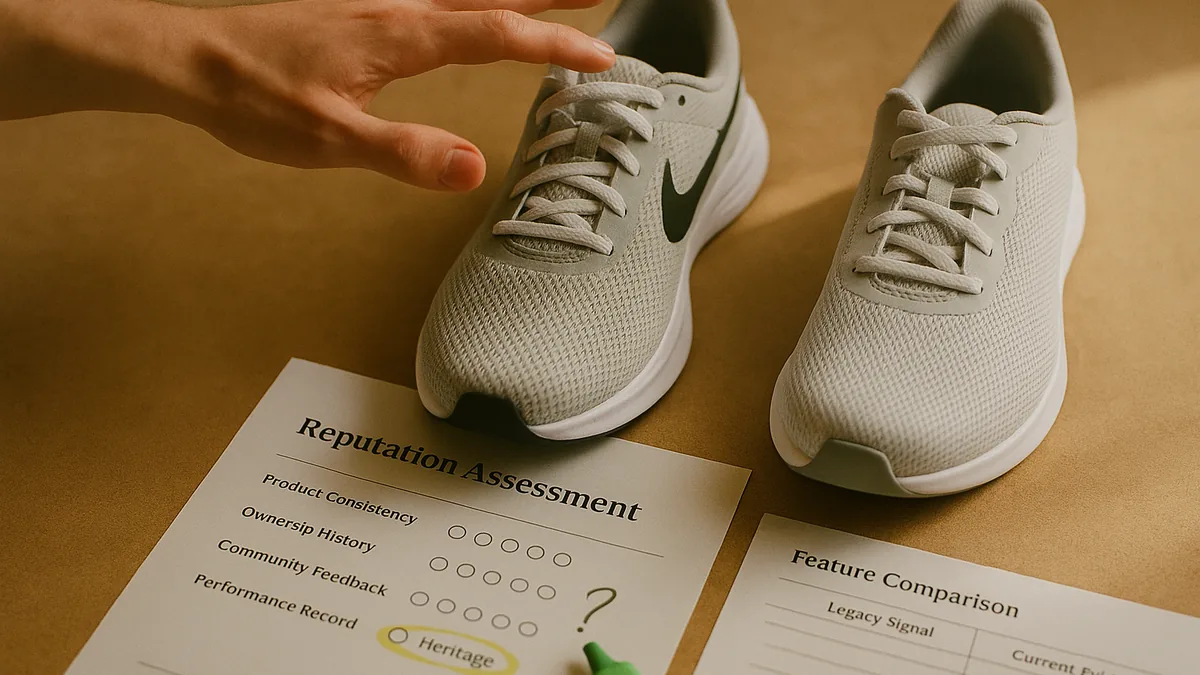
If you've ever chosen one product over another simply because you recognised the brand name, you already understand the basic mechanics of reputation - even if you've never stopped to think about why it works the way it does. By the end of this post, you'll have a clearer picture of what brand reputation actually is, how it shapes your purchasing choices, and - crucially - when it can lead you astray.
What Does Brand Reputation Actually Mean?
It's tempting to think of reputation as something brands build through advertising budgets or clever marketing. In reality, it's far more layered than that. Reputation is the accumulated result of how a brand behaves across many touchpoints over time: the quality of its products, how it handles complaints, the athletes or communities it aligns with, and the experiences reported by real customers.
Consumers absorb these signals gradually - often without making a deliberate effort to seek them out. The result is a set of expectations that kicks in automatically when a familiar brand appears at the point of purchase. That automatic response is worth understanding, because it can be both genuinely useful and genuinely misleading.
How Trust Reduces the Risk of Buying
The core job that reputation does is reduce uncertainty. When you're considering a higher-cost purchase - say, a pair of running shoes for serious training - there's a real risk that the product won't live up to what's promised. A brand with a strong, consistent track record gives you a shortcut through that uncertainty. The perceived risk drops, and confidence in the purchase goes up.
Consumer behaviour research refers to a related idea as the "halo effect". If you've had a positive experience with one product from a brand, you're significantly more likely to trust a different product from the same range - even one you've never tried before. That single good experience casts a positive light across the whole brand. It's a genuinely useful mental shortcut in a crowded market, but it's worth knowing it exists so you can account for it.
When Heritage Works - and When It Doesn't
Some brands carry decades of accumulated reputation, and that history continues to influence buying decisions long after the original products that built it were discontinued. The important question is whether the current product range still justifies the historical trust.
Mizuno is a good example of heritage that has largely held its value. Founded in Japan in 1906, the brand has stayed focused on functional performance across running, football and racket sports. It has deliberately avoided chasing lifestyle and fashion trends, which has helped it maintain credibility among people who take their sport seriously. The reputation and the product have remained aligned.
Reebok tells a more complicated story. Strongly associated with training culture through the 1980s and early 1990s, the brand went through significant ownership changes and strategic shifts that fragmented its positioning. In some communities, the heritage still resonates. In mainstream performance sport, the signal has weakened. The brand name persisted, but what it stood for became harder to pin down.
The lesson here is straightforward: heritage is not a fixed asset. Brands have to earn their reputation continuously through consistent product quality and behaviour. When a gap opens up between the historical image and the current reality, experienced shoppers start to discount what the name alone implies.
Can a Damaged Reputation Be Rebuilt?
The short answer is yes - but it takes more than a marketing refresh. Fila, the Italian sportswear brand, went through a difficult period in the early 2000s when overextended licensing deals led to inconsistent products and a diluted brand identity. Its subsequent recovery, built around archival designs and more selective partnerships, rebuilt genuine purchase intent - particularly with younger consumers who came to the brand without the baggage of that difficult period. Crucially, though, the products themselves had to deliver on what the repositioning promised.
Under Armour offers a more recent case study. After rapid growth built on a clear performance-first identity, increased competition and internal turbulence made its positioning less distinct. The brand has been working to reassert its technical credentials, but whether that effort has fully restored confidence in the category remains an open question.
Reviews, Peer Opinion and the Signals Worth Trusting
Reputation is no longer shaped only by brands themselves. Consumer reviews, specialist forums and peer recommendations now carry enormous weight - and they can move faster than any brand response. A genuine quality issue, documented and shared across review platforms, can shift perception significantly before a brand has had a chance to address it.
For shoppers, this means calibration matters. Not every review carries equal weight - incentivised ratings, review-bombing and isolated complaints can all distort the picture. The most reliable approach is to look for consistency across multiple independent sources: specialist communities, long-term user feedback and platforms with verified purchase requirements tend to produce more trustworthy signals than single-platform star ratings alone.
Key Takeaways
- Brand reputation is built from product performance, customer service, public conduct and community feedback - not marketing spend alone.
- The "halo effect" means one good experience with a brand increases trust in its wider range.
- Heritage has real value, but only when a brand's current products still support it.
- Reputation damage can be recovered, but product substance must back up any repositioning.
- Cross-referencing independent sources gives a more reliable picture than any single signal.
Reputation is a genuinely useful tool when making considered purchases - but it works best when treated as a starting point rather than a conclusion. The brands that have earned and maintained consistent signals over time, like Mizuno, offer real informational value. Others ask you to trust a history that their current products may no longer fully reflect. Knowing the difference puts you in a much stronger position at the point of purchase.
If you found this useful, the full analysis is available over at Review-It, where you'll find more independent editorial on brand performance and consumer decision-making.
Labels: brand reputation, product review, purchasing decisions, consumer behaviour, sporting goods, brand trust, Mizuno, Reebok
Read More
Read the original article and more from Review-It:
- Read the full article on Review-It
- What Makes a Product Feel Reliable?
- Review-It — Independent, Evidence-Based Reviews
- Our Review Methodology
- Review-It on Facebook
- Review-It on Threads
- X (Twitter)
- Threads
- Bluesky
- YouTube Community
About Review-It
This article was produced by Review-It, an independent UK review site. Our verdicts follow a documented methodology, we accept no payment for coverage, and every correction is recorded publicly.


Comments
Post a Comment